Bring the character of your joinery onto the road. Try a warm timber-inspired design for bespoke furniture, precise geometric lettering for site work, or a quieter look for fitted interiors.
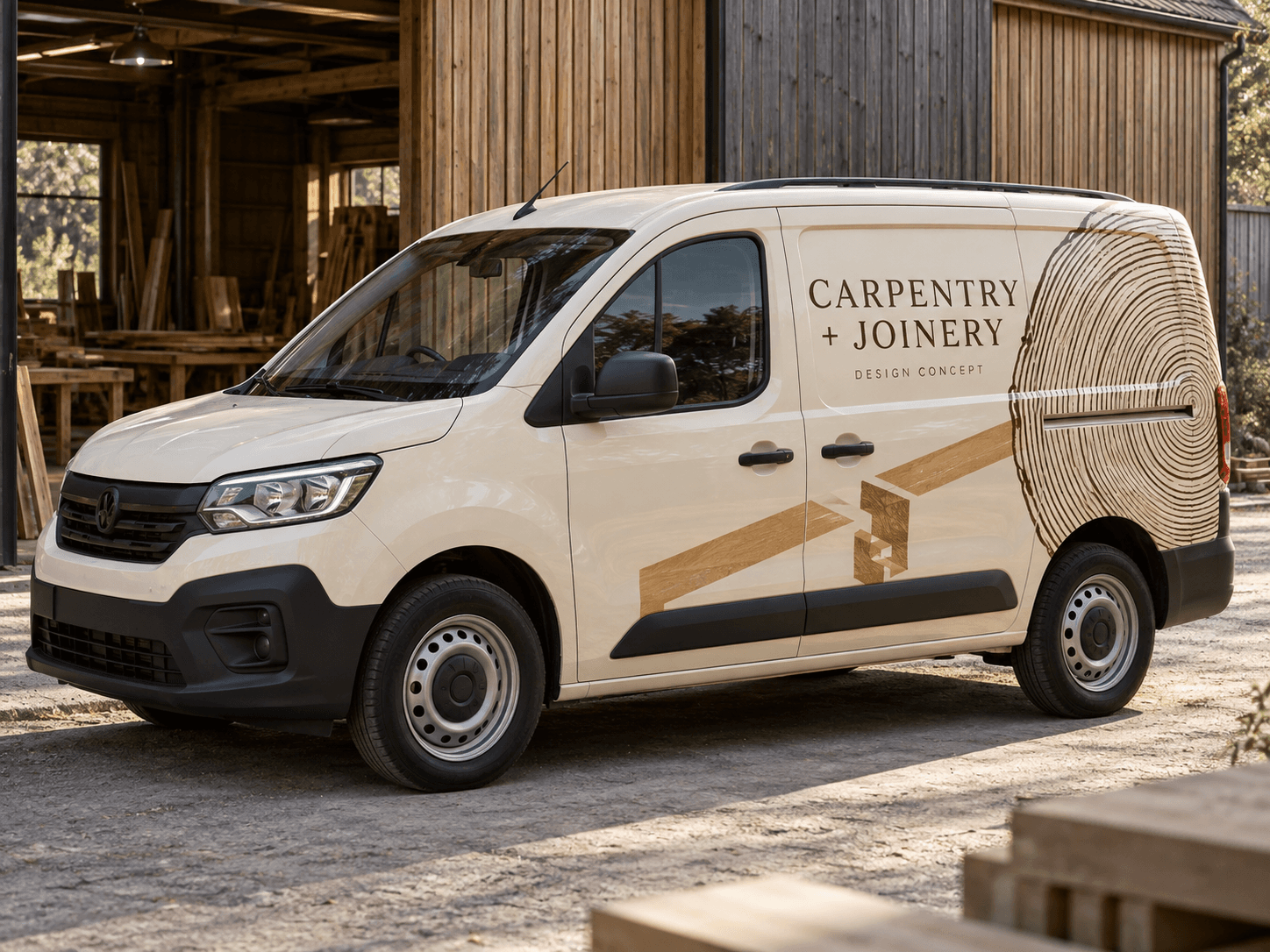
Oversized end-grain rings and a small joint motif create a wood-inspired identity without covering the van in a fake timber texture.Original AI concept · No customer branding
Timber-ring study
Use your own vehicle photo
Add your business logo
Save a concept for your signwriter
Choose a direction
Carpentry & Joinery van design ideas
A cabinet maker and a first-fix carpenter may need very different visual identities. Start with the customer and the type of project you want to describe.
01
Bespoke joinery with timber rings
A large abstract growth-ring drawing makes a recognisable motif while leaving the van looking clean. Warm brown lettering on cream gives the design a material connection. Keep the fine rings away from the contact line.
Try this with your van
Create bespoke joinery van signage for [business name]. Use cream and walnut brown, an oversized wood growth-ring illustration on the rear quarter, and a small ochre joint motif. Show [joinery services] and [contact details] on clear space.
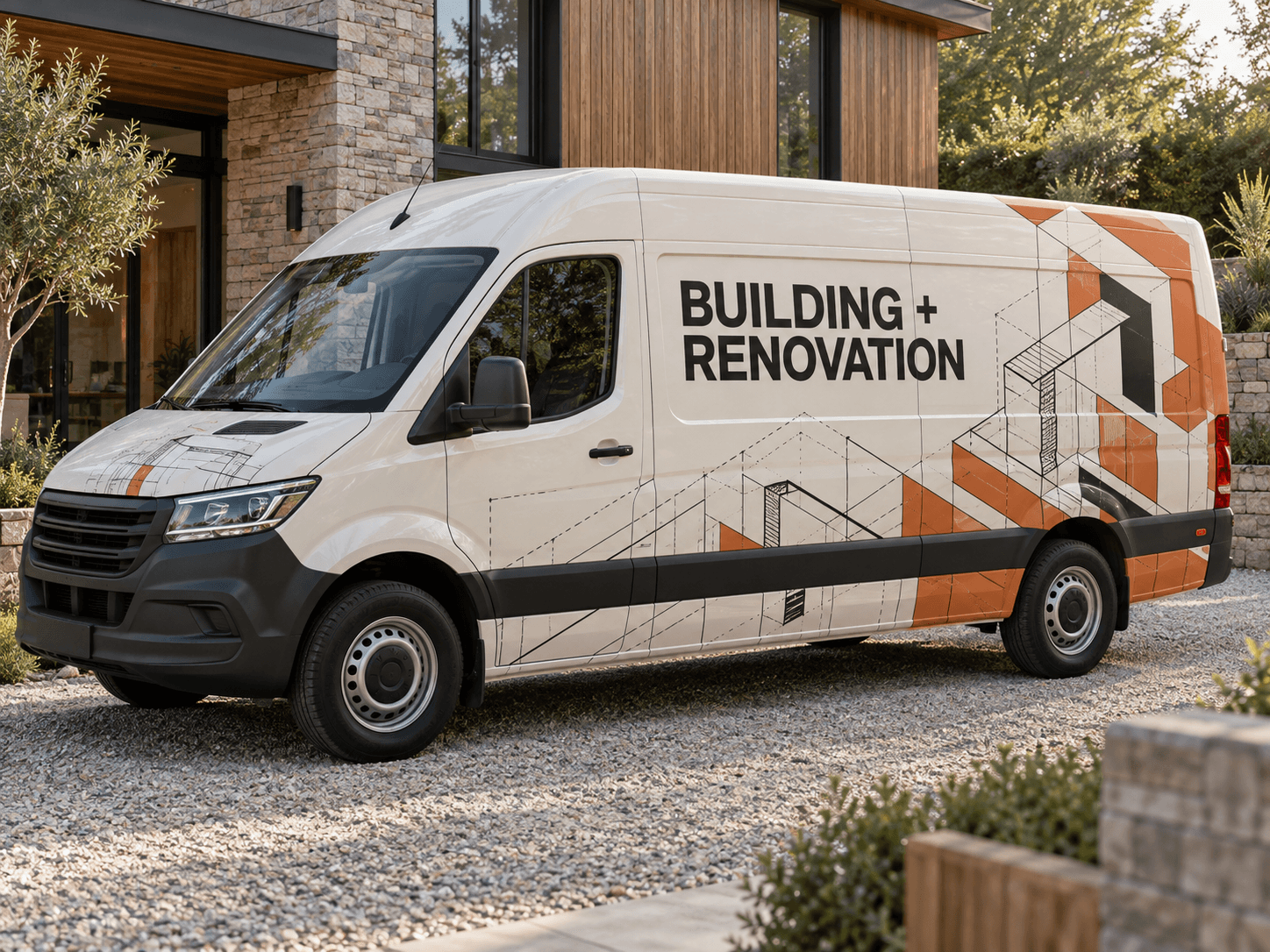
Bold type, straight lines and a simple framing graphic suit a practical contractor identity. Give first fix, second fix or another main service a short dedicated line. Avoid reducing a long service list to unreadably small lettering.
Try this with your van
Design a site carpenter van for [business name]. Use bold [brand colour] lettering, a restrained timber-frame line motif, [actual carpentry services] and [phone or website]. Retain plenty of original paint.
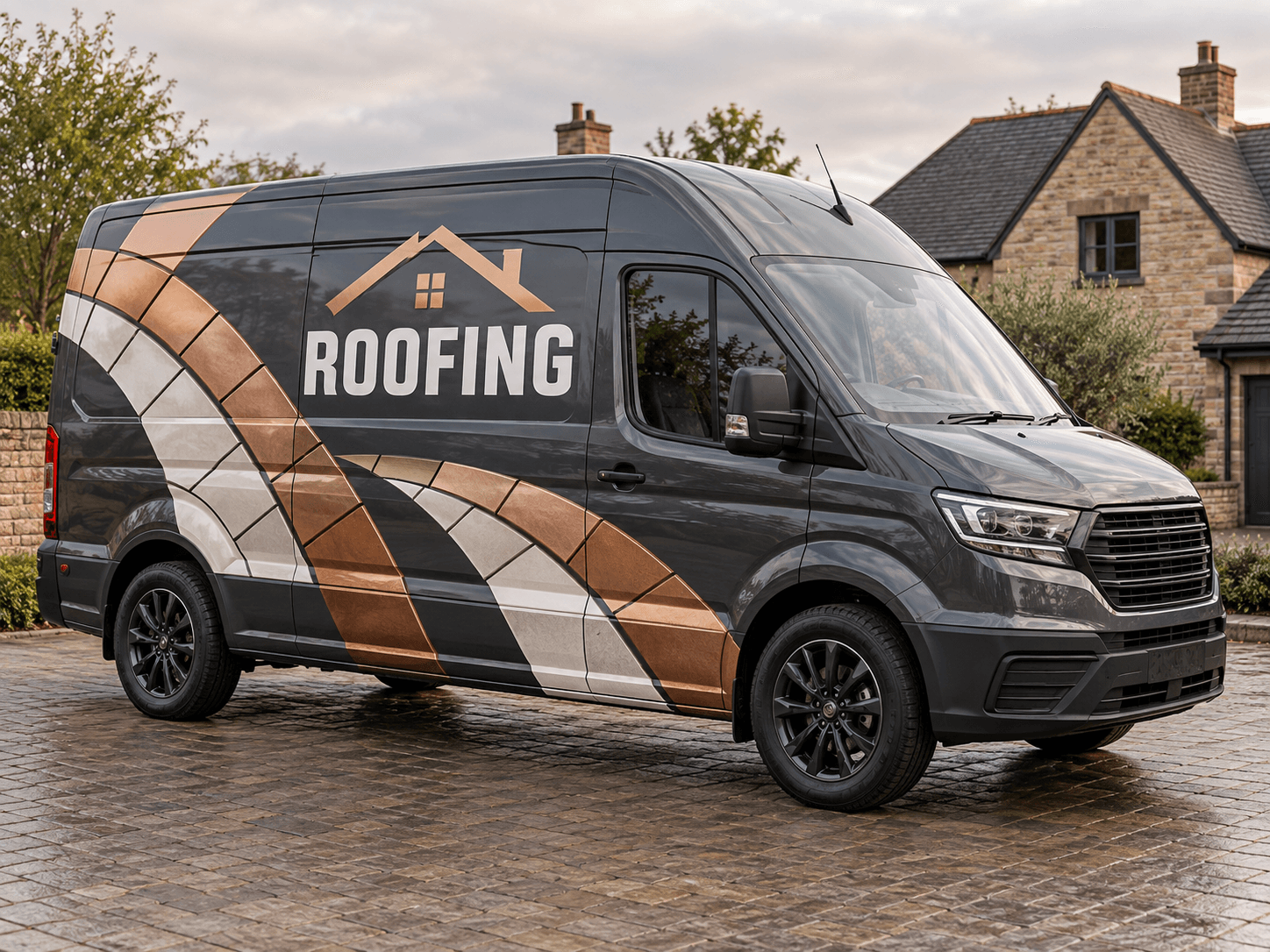
A restrained panel layout can echo the proportions of cabinetry. Use a quiet colour palette and make the fitted-interior service explicit. A website may be useful when your customers want to see previous work before enquiring.
Try this with your van
Design refined fitted-furniture van signage for [business name]. Use [brand colours], subtle cabinet-panel geometry, the words [kitchens, wardrobes or actual services] and [website]. Keep the typography large and the background calm.
Your chosen prompt opens in the studio, ready for your photo and business details.
Upload your photo and logo.Vehicle first, optional logo second.
Make the prompt yours.Replace the square brackets with your business details.
Generate and save a favourite.Open the image in Your concepts to compare and download.
Before you generate
Turn material detail into a clear message
Abstract the grain
Photographic wood grain can overwhelm small text. Ask for a larger, simplified line drawing and compare it with a lettering-only option. The vehicle itself should still look like your van, with handles and sliding-door edges intact.
Name the work plainly
Bespoke joinery, fitted wardrobes and site carpentry tell people more than a generic craft slogan. Put the work you actually want enquiries for into the prompt, then give your original logo and contact copy to the signwriter.
Designed around your work
Explore related industry designs.
Specific layouts, colours and starter prompts for different kinds of work.
Can I create a van design for a cabinet-making business?
Yes. Use the fitted-furniture direction and describe your cabinetry, kitchens or bespoke work. Upload your actual van and optional logo. You can compare a refined lettering treatment with a more graphic timber-inspired concept.
Does the design need saws or tool illustrations?
No. Material-inspired lines, joinery shapes or just strong lettering can communicate the trade. Tools are optional; the service line should still explain the business when the image is viewed small.
Start with your own vehicle
See the idea on your van.
You bring the photo and business details. AI helps you explore the design.